
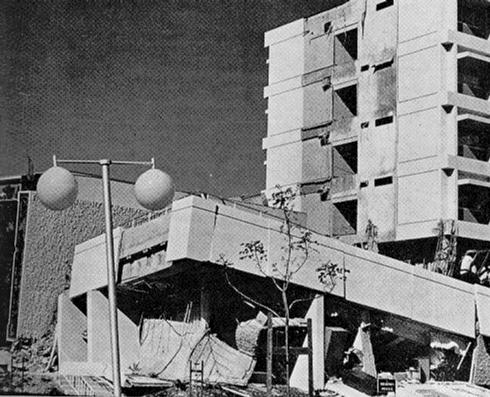
On the cold morning of February 9th, 1971, 41 seconds past 6 o’clock, southern Californians were in for a rude awakening as a Mw 6.5 earthquake struck off the foothills of the San Gabriel Mountains. The earthquake occurred on the San Fernando fault zone, a zone geologists have determined to be an area experiencing thrust faulting.
What is a thrust fault?
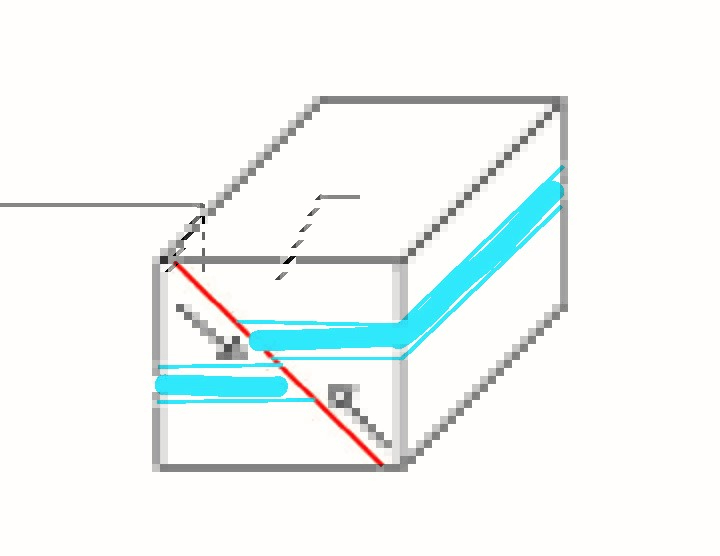
A thrust fault is a fault in which the hanging wall is being “thrusted” upwards on top of the footwall. These types of faults are referred to as reverse or thrust depending on the angle of the fault (figure 1).
The Science stuff:
The depth at which the earthquake was generated was determined to be approximately 8.4 km (5.22 miles) below the surface of the Earth.
Surface rupture length (breakage of the surface of the Earth): 19 km (12 miles) long.
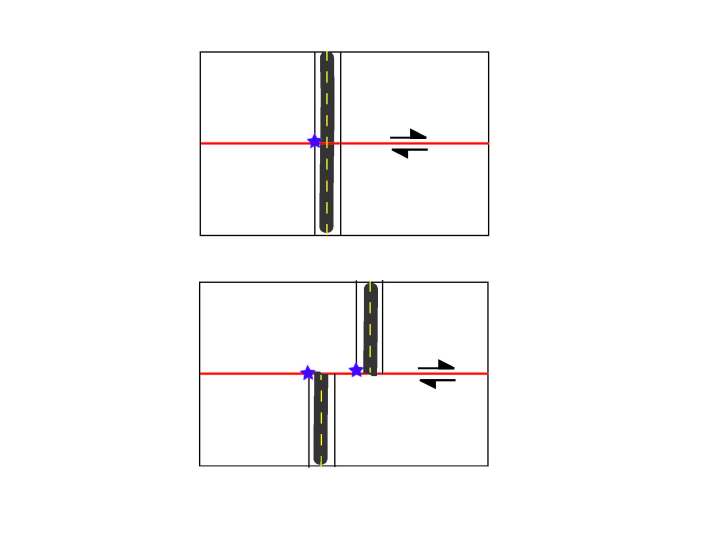
Maximum Slip (offset produced by giant quake): 2 meters. To understand what maximum slip means we can imagine a road that runs right on top of an active fault. The fault then ruptures and offsets the road. Scientist then measure the piercing points (two points on the road that were once together), which then can be measured for the amount of slip that occurred on this road by the quake (figure 2).
The Bad stuff:
Physical Damage: Veteran’s Administration Hospital collapsed, Olive View Community hospital was severely damaged (Sylmar), freeway overpasses collapsed and much more.
Damage Cost: over $500 million in property damage
Deaths: 65. (This number could have been much greater if the quake hadn’t struck so early in the morning.)
What were the takeaways of this earthquake?
This earthquake produced several surface ruptures which damaged homes, commercial buildings, and many other structures. This remains a major issue for Californians. As a direct result of the 1971 San Fernando earthquake, a law was signed to mitigate the potential hazards of surface rupture faulting to structures which humans occupy. This was called the Alquist Priolo Special Studies Zone Act. Property owners that try to build a human occupant structure at AP zones (like apartment buildings etc.) must conduct a study to determine if a local fault is active. If determined to be active (10,000 years or younger), then, by state law, building is prohibited at that location unless at least a minimum of 50 feet from the active fault trace. But is this really any better?
I hope you enjoyed this blog.
Any questions? Feel free to ask.
Bryan C.
Edited by: John Micha Rincon

 Earthquakes: A look at the Past