

Around 2:30 pm on March 26, 1872, a magnitude 7.4-7.9 earthquake shook the Owens Valley. Approximately 27 people were killed. The constraint on the earthquake’s true magnitude is uncertain due to lack of seismic data (since there were no seismometers at the time). Based on paleoseismic data, geologists were able to narrow down the margin of error to confidently publish that the magnitude of the 1872 Owens Valley Earthquake was between 7.4-7.9. Regardless the fact, this was one of the strongest earthquakes to hit California in recorded history. The fault that ruptured that generated this earthquake is called “The Owens Valley fault”. The majority of slip is right-lateral but it does have a normal component as well. Picture this: If you were standing on one side of the fault (does not matter which side) and the fault was to rupture you would witness the other side of the fault shift to your right. The normal component (vertical slip) means that one side of the fault block is going to drop in the vertical axis, thus leaving exposed the wall of the fault plane that geologist would call a scarp. The Owens Valley fault has not ruptured since then.
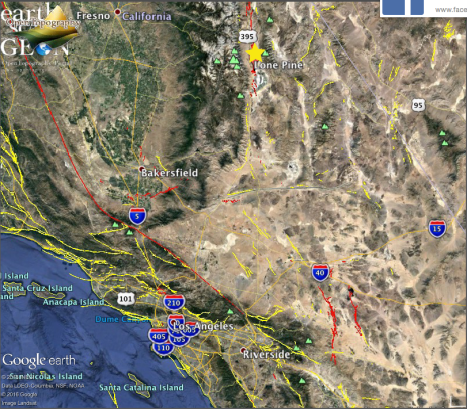
Map showing the 1872 earthquake epicenter.
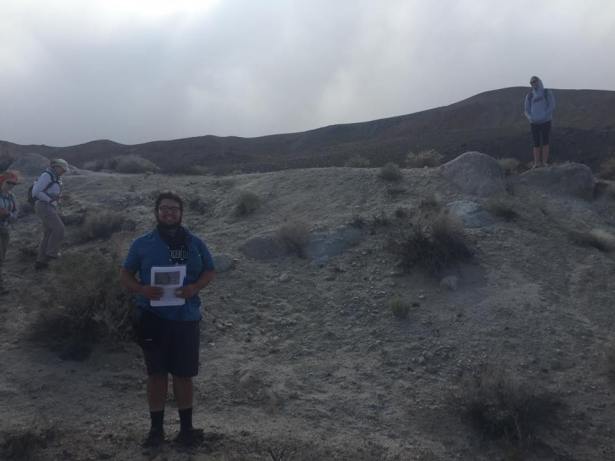
This is a photo of me standing in front of the Owens Valley fault scarp. (Photo by: Juicy Craig)
If you are interested in learning more about this earthquake event I have attached a poster I created all on the 1872 Owens Valley earthquake. Check it out, just click on the link below “owensvalley”.
Thank you all very much for taking time to read this.
Any questions or comments? Please leave them below!
Peace out yo,
Bryan

 Earthquakes: A look at the Past
Very nice!
LikeLiked by 1 person
Cool! Well done!
LikeLike